Physical therapy, occupational therapy, speech and language therapy, along with adaptive equipment, are popular treatment options for children with cerebral palsy. Used within a coordinated, comprehensive treatment plan, therapy plays a vital role in managing the physical impairment while maximizing mobility potential. Therapy is employed to manage impairment (primarily spasticity, contractures and muscle tone), manage pain, and provide optimum quality-of-life by fostering functionality, self-care, and independence. Therapy also wields mental, emotional, academic, and social benefits for those with cerebral palsy.
If implemented as part of an early intervention program while the child is still developing, some therapy for cerebral palsy can lessen the impact of impairment and minimize the child’s potential for developing associative conditions. Early intervention is not always possible, as diagnosis is sometimes delayed until the brain is fully developed, but in some cases, physical therapy may be provided before a diagnosis is made.
Therapy can be used alongside other treatment options, such as drug therapy, surgery, assistive technology, complementary medicine and alternative interventions.
For instance, if a child is struggling with the demands of physical therapy, he or she may show signs of frustration. Behavioral therapy can assist the child gain better control of his reaction to the situation and environment, while massage therapy is applied to increase relaxation and pain control.
When the multi-disciplinary team of practitioners determines the child’s care plan goals, they will determine appropriate therapy options. Over time, as the child develops and as conditions arise, other therapies may also be considered.
Therapy is not limited to the child. Therapy can be helpful to caregivers and parents, as well. For instance, nutrition counseling can help a caregiver understand the dietary needs of the child. Behavioral therapy can help a parent learn how to best reinforce the child’s therapy progress in a positive manner.
Therapy comes in many forms, for differing purposes, and may be applied at various stages of the child’s development or during adulthood.
Following are some popular therapies commonly employed to assist those with cerebral palsy.
TOP TEN THERAPIES USED IN CEREBRAL PALSY TREATMENT
BEHAVIORAL THERAPY (PSYCHOTHERAPY)
Behavioral therapy, also known as cognitive behavioral therapy, is rooted in the belief that emotional challenges and unproductive behaviors are learned and can therefore be changed. In behavioral therapy, troubling situations are identified and thoughts, emotions and beliefs about those situations are explored, challenged and ultimately altered. Behavioral therapy empowers the individual to respond to challenging situations in a more effective and acceptable manner.
MASSAGE THERAPY
Massage therapy embodies the power of bodywork. The human body contains 11 major organ systems; massage can manipulate these systems in differing ways, based on the momentary needs of the individual. Massage therapy uses the power of human touch for therapeutic purposes, as well as pampering and rejuvenation. Therapeutic benefits are wide ranging and include controlling stress levels, reducing pain, releasing muscular tension, improving digestion, stimulating sensory receptors, stimulating circulation, providing flexibility, and enhancing range of motion.
NUTRITIONAL AND
DIETARY COUNSELING
With the majority of individuals with cerebral palsy reporting feeding or digestive difficulties, a dietary counseling program can be highly beneficial. Skilled practitioners work with primary care physicians to adjust diet, intake, substance, and supplements in ways that contribute significantly to an individual’s overall health. Most dietary concerns for those with cerebral palsy focus on what to feed, how to prepare food, how to feed and when to feed. Dietary therapy can be structured to meet the individual’s unique needs.
OCCUPATIONAL THERAPY
Occupational therapists provide skills required in daily living for those with impairment. These professionals focus on assessing and developing an individual’s ability to function in normal daily activities at home, in school, out in public, and at work. The goal is to foster independence, productivity, and self-care. Occupational therapists will help a person improve strength, dexterity, and coordination while performing tasks, but they will also assist in decision-making, abstract reasoning, problem-solving, perception, memory, sequencing, and more. When an individual requires environment design changes or assistive technologies at home, school, work, or play, an occupational therapist will help secure the necessary items and train the individual and his or her family how to use the equipment.
PHYSICAL THERAPY
AND PHYSIOTHERAPY
(REHABILITATION)
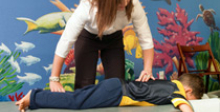
Though the terms are often used interchangeably, physical therapy and physiotherapy are forms of the same profession practiced in slightly different ways. These forms of therapy are part of the branch of rehabilitative health devoted to restoring, maintaining, and promoting optimal movement, physical function, and health. Physical therapy and physiotherapy provide therapeutic intervention to treat activity limitations, participation restrictions, and environmental barriers experienced by those with physical impairment. They are considered two of the most important therapies for the treatment of cerebral palsy. Physical therapy or physiotherapy begins soon after diagnosis is made and is an integral part of early intervention and maintenance programs. They optimize physical functioning. They can incorporate functional training, manual therapy, assistive technologies, and electrotherapeutic modalities.
To find a therapist, call 1-800-MyChild (1-800-692-4453)
Or, to return to Treatments for Cerebral Palsy
RECREATIONAL
AND PLAY THERAPY
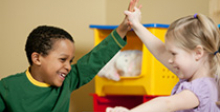
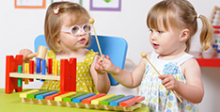
Formal recreational and play therapy is play with purpose. Maneuvering around obstacles, filling up sand pails, pouring liquids, playing make-believe and deciphering which object doesn’t belong are all examples of play that exercise cognitive and motor skills. Play also helps combat immobility, release tension, aid in development, and improve functioning while enhancing human interaction and communication skills. Play therapy offers stimulation and socialization while fostering independence. And, it’s just plain fun!
SENSORY INTEGRATION THERAPY
Children with cerebral palsy or those born prematurely can display symptoms of sensory integrative dysfunction, an abnormal degree of sensory processing, whether decreased or increased. Sensory integrative dysfunction can make a child appear clumsy when he or she walks, or create difficulty with fine motor skills such as pencil control, which, in turn, can lead to delay in writing ability. Sensory dysfunction can also cause over-sensitivities or under-sensitivities that lead to mental and physical distraction or fatigue. Problems with sight, hearing and balance can be addressed through sensory integration therapy.
SOCIAL THERAPY
Children with impairment may experience any number of social challenges, such as social anxiety, relationship problems, dependent personality disorders or social skill difficulties. Anxiety, panic, shyness, or emotional pain can be replaced with emotional growth and new ways of perceiving, thinking and interacting. Social therapy can provide a child with new skills to use towards healthier relationships with others and within their surroundings. The effect of social therapy can be empowering. Often, pain is recognized and released. The child then develops new ways to respond to people, situations and moments in his or her life.
SPEECH AND
LANGUAGE THERAPY
Language, speech, breathing, chewing and swallowing difficulties can be present with various health conditions, including brain injury, cerebral palsy, cognitive impairment, hearing loss, and learning disabilities. Oromotor dysfunction, facial muscle impairment, is common in children with cerebral palsy. Oromotor functioning depends on an intricate process of sending and receiving messages to various facial, throat and neck muscles to coordinate breathing while talking, chewing, swallowing and digesting. Speech-language pathologists use augmentative or alternative communication methods with those who have little or no ability to speak. With assistance, children can learn to improve communication by strengthening muscles, making sounds, improving voices, correcting accents, and using compensatory strategies. Speech and language pathologists also address swallowing disorders, which, untreated, can lead to aspiration, malnutritian, respiratory distress, digestion difficulties, and pneumonia. They work closely with respiratory therapists, registered dietitians, and gastroenterologists to improve various associative conditions.
VOCATIONAL COUNSELING
Vocational counseling assesses an individuals intelligence, aptitude, interests, abilities and skill levels in order to assist with career pathing. Much satisfaction is derived from being a productive and contributing member of society. Employment allows an individual the ability to earn income and provide financially for his or her self and, at times, others. Vocational therapists partner with businesses, government agencies, educational institutions and the employment industry to develop mutually beneficial opportunities for those with special needs. Vocational therapists work with employers to create and fund inclusionary workspaces. They also assist in assessing, training and developing individuals for positions that suit his or her skill levels.
MyChild™
ONLINE CONTACT FORM
Contact Us, Today!
MyChild™
CALL CENTER ASSISTANCE
Call Today! 1-800-MyChild