Mother with Children Banner

Treating Cerebral Palsy is almost as complex as the condition is, and there’s no cookie-cutter approach because each individual is affected differently. Although the brain injury that causes Cerebral Palsy cannot be healed, the resulting physical impairment can be managed with a wide range of treatments and therapies. Although there is no universal protocol developed for all cases, a person’s form of Cerebral Palsy, extent of impairment, and severity level help to determine care.
While therapy and adaptive equipment are the primary treatment protocol for Cerebral Palsy, an individual may also require drug therapy and surgical interventions. Some families, with caution and physician guidance, turn to complementary and alternative medicine for additional assistance.
Although each medical specialist may have specific care goals related to their specialty and the individual’s unique condition, the overriding treatment goal for those with Cerebral Palsy is to:
Conventional treatment methods involve systems, practices and products that have been researched, tested and approved by the medical community as acceptable forms of treatment. Complementary medicine differs from conventional as it has not yet been fully tested or approved, but may be under consideration. Complementary medicine, when used under doctor supervision, can be used as a complement to an existing treatment plan. Alternative medicine is a treatment method that is used to replace conventional medicine.
There are risks involved in using complementary or alternative forms of medicine so anyone considering a CAM should consult with their doctor before engaging in these forms of treatment.
The child’s physical impairment is considered his or her primary condition. The primary physical impairment may involve challenges with muscle tone, reflexes, posture, balance, fine motor functioning, gross motor functioning and oral motor functioning. These conditions can, in turn, create secondary conditions that also require treatment. Management of the Cerebral Palsy is further complicated by co-mitigating factors not caused by the same brain injury that caused Cerebral Palsy, but that still exists in the child as a separate condition requiring simultaneous treatment.
For example, the child’s Cerebral Palsy may cause a problem with facial muscle control and coordination. This would be considered a primary condition. Due to the lack in facial muscle control, the child may find it difficult to chew, swallow, or communicate, which are secondary conditions. In addition, a child may have an unrelated condition, such as asthma, which would be considered a co-mitigating factor.
Cerebral Palsy varies in type, location and severity of impairment. The child’s primary care physician, usually the pediatrician, will assess the child’s overall health to develop a comprehensive treatment plan to meet the unique needs of the child while taking into consideration the family dynamics. A comprehensive treatment plan is required to coordinate care of all conditions – primary, secondary, associative and co-mitigating conditions. Due to the variety of conditions that need to be addressed, a treatment plan usually involves a multidisciplinary team of medical specialists working closely with the child’s pediatrician to establish and accomplish care goals. Parents or legal guardians work closely with the multi-disciplinary team.
A comprehensive treatment plan takes the child’s abilities into consideration, as well as his or her socio-economic situation and home care dynamics. Health insurance coverage is important and can be obtained through government sources, employer benefit programs, or private providers. Many avenues of government assistance, community support, and professional services are designed to assist in fulfillment of these needs, while the public education system is mandated by the government to accommodate a child’s special needs throughout his or her school-age years and transition to adulthood.

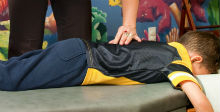
A person’s ability to transcend his or her physical limits is in no small part due to the kinds of therapies that are used to fine-tune his or her abilities. Therapy fosters functionality, mobility, fitness, and independence. The types of therapies vary based on a person’s unique needs, type of Cerebral Palsy, extent of impairment and associative conditions. Therapy can also help parents and caregivers.
Therapy for Cerebral Palsy includes