Vehicle Modification
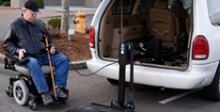
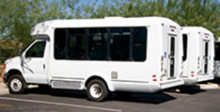
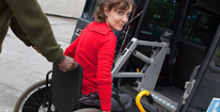
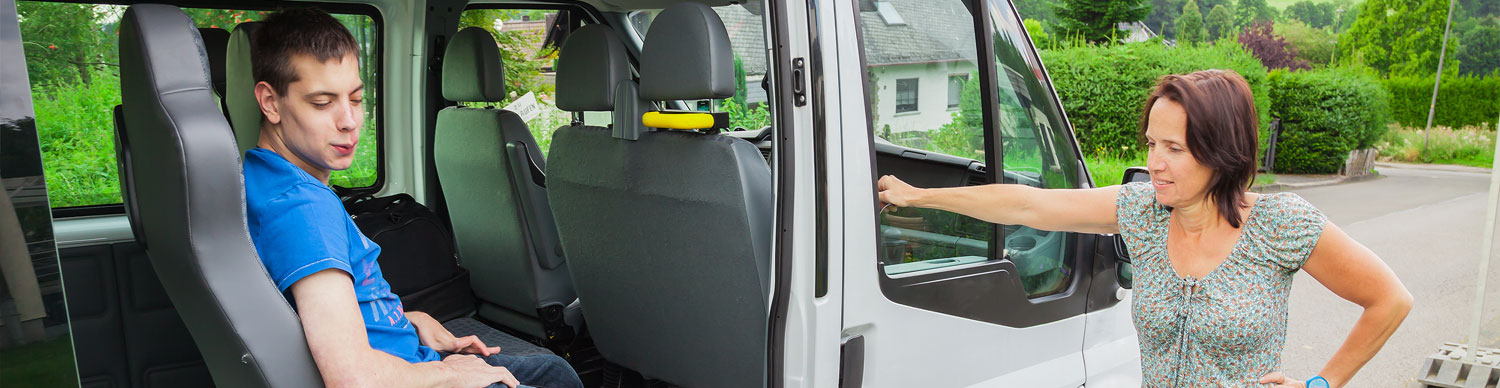
Vehicle modifications assist a person with cerebral palsy by providing access to safe transportation and travel. Physicians, driving rehabilitation specialists, automotive dealers, automotive manufacturers, rehabilitation engineers, and physical and occupational therapists work together to provide and recommend a variety of supports to help with transportation needs. Vehicle modifications can range having a newly-purchased automobile fully modified for a person with disability, or having one item – like a steering wheel grip – installed for a person with fine motor skill impairment.
Vehicle modification guidelines are constantly updated. If an individual buys, rents or leases an older vehicle that has been modified, he or she should ensure the modifications are up-to-date with current standards.
In some cases, a driver will be required to obtain proper training and licensing to operate a modified vehicle. This training is provided by driver’s training establishments or driver rehabilitation courses, usually under the guidance of a Driver Rehabilitation Specialist (DRS). DRSs perform:
- Driver evaluation
- Adaptive driving instruction
- Driver retraining
- Vehicle consultation
- Vehicle inspection
- Functional inspection with consumer
If the modification does not affect the driver, just the usability, vendors usually have instructions and training available for the proper use of installed equipment.
Vehicle modification specialists and vocational therapists are aware of the process required to pass driver’s training. Typically, the process includes the following steps:
- Needs Analysis
- Vehicle Evaluation
- Modification Recommendations
- Vendor Bidding
- Funding Opportunities Secured
- Procurement
- Installation
- Inspection
- Training
Professional consultations and appropriate modification recommendations ensure individual safety and well-being when selecting, purchasing and implementing vehicle modifications. These consultations not only provide proper equipment based on unique needs of the person with cerebral palsy, but also may help with funding resources and insurance coverage options. Alternate funding may also be available to help cover the specialized reinforcements that benefit the individual, the primary caregiver, and the rest of the family.
For the purchase of new vehicles, many automobile manufacturers offer mobility rebate programs. This information is provided on their websites under a reference for accessibility, mobility or vehicle modifications.
Vehicle modifications may include:
- Amputee rings
- Automatic door/window openers
- Bioptic telescope
- Car seats and restraints
- Driver seat adaptations
- Floor mounted steering
- Column extension
- Gear selector
- Hand controls
- Joy-stick system
- Knobs
- Left-foot accelerator
- Lifts and ramps
- Modified effort steering
- Palm grips
- Pedal extensions
- Power steering
- Quad key-holder or turner
- Raised roof or dropped floor
- Remote switches
- Right-hand turn signal
- Seats
- Siren detector
- Stability management systems
- Seat belts
- Steering cuff
- Tie-downs
- Transfer seats
- Tri-pins
- Van conversions
- Wheelchair carrier
RESOURCES
Mobility Experts
Organizations specializing in procurement, regulation or operation of modified vehicles include:
RESOURCES How MyChild™ Can Help
Knowing about resources and opportunities can make a difference, but knowing how to find and qualify for those resources is key.
MyChild™ recognizes that families touched by cerebral palsy are busy. Raising a child with mobility impairment requires doctor visits, treatments, therapies, and a host of responsibilities within the home, school, and community. MyChild™ hopes to help. Your time is precious.
Over the years, MyChild™ has expanded our database of contacts, information, and resources, which may be of assistance. We share general information online, but also offer a wealth of state and local information that may be more appropriate to particular circumstances and an individual child’s needs through our call center.
MyChild™ operates a call center to efficiently assist parents and others with questions and concerns. Call 1-800-MyChild (1-800-692-4453) for resources within your community, based on your family’s particular circumstances.


MyChild™
MyChild™
MyChild™
MyChild™